Fröhlich deutsch

December 2nd, 2011

So unterhaltsam die in der Deutschschweiz gesprochenen alemannischen Dialekte zuweilen anmuten, so fremd bleiben sie Deutschen in aller Regel auch. Die Geschichten, die das Schwizerdütsche allein in Ausdruck und regionaler Prägung bewahrt, der stolze Bezug auf Heimat und Tradition, welcher im Auf- und Fortleben der schweizerdeutschen Mundarten sich erweist, das Nichteinheimischen befremdlich nuancierte Repertoire, eine fein abgestimmte Klaviatur im Wechselspiel von Vertrautheit und Ausgrenzung, der changierende Singsang und das Chuchichäschtli als Schweizer Schibboleth (ein Gordischer Zungenknoten, wenn es denn je einen gab), die altertümliche und ausgesuchte Höflichkeit im Schimpf auf den Fremden und Mattenenglisch und Bärndütsch als klein- und kleinstteilige Ausdifferenzierungen sprachlicher Praxis - das alles ist gleichermaßen neidenswert schillernd als auch ungemein verschlossen.

Glücklicherweise können manche Defizite im Verstehen behoben werden, wenn man sich niedergeschriebener Texte annimmt und diese sich lautlich aneignet, d.h. sie vor sich hin laut liest und spricht. Erfahrungen mit süddeutschen Dialekten, samt und sonders dem Badischen, Schwäbischen, Elsässischen und West- und Oberallgäuerischen, kann helfen, nicht zuletzt uns Norddeutschen, die wir unserer niederdeutschen Mundarten und Geschichte großteils (und allzu leichtfertig) verlustig gegangen sind. Hier ein Panazee för plattdüütsch.

Text: Hanna Fröhlichs Erzählung Oha lätz! in dt. Übertragung:
O weh! (76 kB) (PDF-Dokument)
Oha lätz! (schwizerdütsch) (HTML-Fassung)

Apparat für die Übertragung:
DRS 1 Mundartlexikon
Wörterbuch Berndeutsch
Schweizerisches Idiotikon
Grimmsches Wörterbuch

s’Mundart: weder zrugg zum Anfang

November 30th, 2011

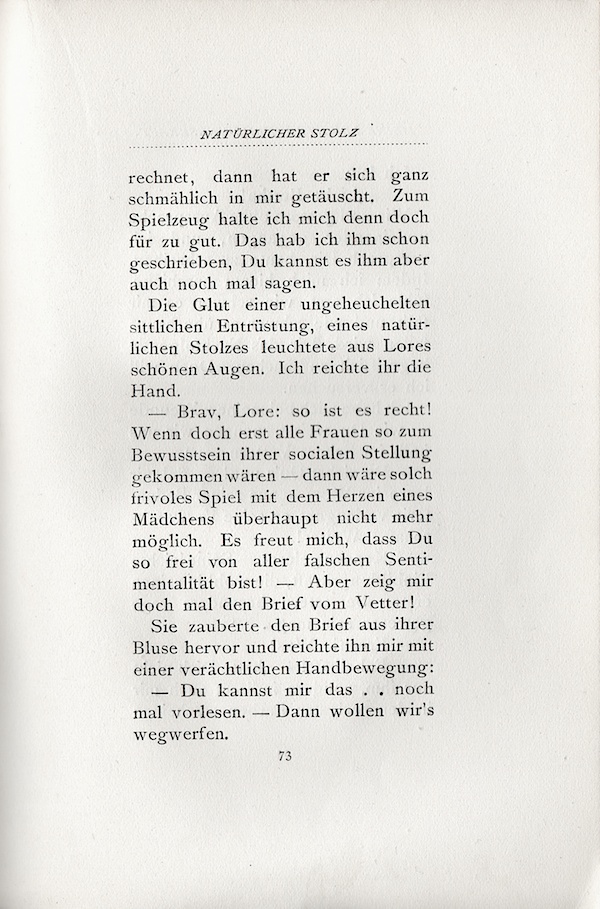
[23] Oha lätz!

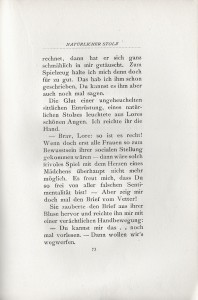
Im-e-ne schöne Ort im Aargäu het nonig lang es Pärli Hochsig gha. S’Rägeli, so het das Brütli gheiße, isch nümme grad es hüttigs Häsli gsi und zue de Schönschte het mes wahrhaftig au nid chönne zelle (denn im Vertrouwe gseit, es het es chlis Högerli!).
Aber wie me das jo mängisch trifft im Läbe, das Högerli wird verdeckt mit Gäld und Guet, und wenn eine schön warm cha ine sitze, so luegt er so nes Fehlerli chum a – ämel vor em Hochsig isch es so! –
De Hans-Ueli het’s grad so gmacht; und trotzdem er vo arme Lüüte härgschtammt het, händ sogar no Schtimme do und dert welle luut wärde im Dorf: “De

[24] hätt jez gwüß no en anderi chönne uselüpfe, so ne subere Burscht!” –
Wo’s aber gar do no bekannt worden isch, de Hans-Ueli heig us der Frömdi vier und fümf Tuusigi mitbrocht, do het mängi vo s’Rägelis Fründinne voll Niid dänkt: Wenn men au das vorhär gwüßt hätt! – de hätt i au no gnoh! Wer das G’rücht eigetlech under d’Lüüt brocht het, het niemer gwüßt, sicher isch es aber us der Familie vo der Brut cho. Jo nu, z’mache isch do nüt meh gsi, s’Hochsig isch agseit worde, und alli, die wo de Hans-Ueli sunscht no gärn gha hätte, händ sech tröschtet, wenn sie nume wenigschtens zum Hochsig iglade worde sind.
En wunderschöne Herbschttag isch es gsi, wo sie z’sämme g’geh worde sind, und mängs no so hübsches Meitschi het nid so nes flotts, fidels Hochsig, wie das Rägeli mit sim Högerli. –
’s isch halt eso gsi – d’Schwigerältere händ scho lang under sich usgrächnet, wie sie denn, vo dene paar Tuusig vom Hans-Ueli, ihres Heimetli wele vergrößere und do und dert loh mache, was eigetlich scho lang nötig gsi wär; wenn er jo bi ihne inesitzi, dörf er denn nüt säge! Drum het de Schwigervatter i siner Freud jez a dem Tag mängs Fränkli loh schpringe und het s’Gäld nüt agluegt – sunscht dernäbe ischt er en huuslige g’hebige Buur gsi, wie nume eine! I der Wirtschaft, wo das Fescht abghalte worden isch, händ sie scho flott tanzet, und dem Schwigervatter sis Härz isch immer größer worde vor Glück, je meh leeri Wifläsche als vor ihm zue gschtande sind. Z’letscht chan er’s nümme ushalte,

[25] er nimmt de Hans-Ueli und zieht en voruse vor d’Türe, s’isch no vill gsi, daß er ne nid ume Hals gnoh het. – Jez aber dusse wo’s niemer gseht, drückt er ne fescht, so fescht a sech, als er nume het chönne und chücht ihm derbi glücksälig is Ohr: “Gäll, für eso vier, fümftusig Fränkli cha me scho zweuihundert loh schpringe – das macht nüt?”
Jez wird aber de Hans-Ueli schtutzig – denn er isch no zimli nüechter gsi – und seit: “Jä los du, Schwigerältschte, wer het der gseit, daß es Tuusigi gmeint sige? S’säb Mol wo d’ mi gefrogt hesch, han i nume gseit: ‘öppe so vieri oder fünfi chönne’s scho si –’ i han aber gmeint ‘Hunderter’ – wenn du’s halt andersch ufgfaßet hesch, chan i gwüß nüt derfür.” Isch ächt die früsch Luft au no d’schuld gsi dra – dem arme Büürli isch sis Rüschli mit eim Chlapf verschwunde gsi, grad wie ewägg blose – ganz gläsig het er de Hans-Ueli agluegt, so daß de no schier Verbarme übercho hett: “Los, Ätti,” seit er, “jez wämmer no en luschtige Tag ha, mer wänd denn nochhär zelle, wie as es öppe isch.” –
Aber de het de Chopf loh hange, s’isch nüt meh azfoh gsi mit em und wo sie wider ine chöme zue de Gäschte, het eine der ander lisslig gschtüpft: was isch ächt au undereinisch i de Ma gfahre? Nume wenn er denn zuefällig so ne “treue Blik” ufgfange het, wo dem Hans-Ueli gilt, denn het er müesse dänke: Oha lätz – do isch öppis nid richtig! – –
Ganz schtill isch eis umes ander hei – bald sind nume no d’Hochsetlüüt do gsi und die sind so schtill

[26] hei, dur’s Dorf uf, wie wenn undereinisch s’Luschtigsi verbotte wär.
Mänge het sider scho d’ Nochbere gfrogt: was isch, weisch nüt – was het’s ächt do g’geh? – aber s’rächt weis halt niemer, die wo’s agoht, händ sech fein schtill.

ex:
Hanna Fröhlich (Pseudonym v. Anna Klara Hedwig Bertuch): Fideli Schwizerg’schichtli
Philipp Reclam jun. Leipzig 1922, S. 23-26

Zur Geschichte, Varietät und selbständigen Entwicklung des Schwizerdütsch siehe das Schweizerische Idiotikon (das Schweizerdeutsche Wörterbuch).
Ein Vademecum zur berndeutschen Variante findet sich unter dem Titel Es chlys Bärndütsches Wörterbüechli.

s’Mundart: andersch Schwizerdütsch

November 28th, 2011

[42]

Summerszyt, o summerszyt
Uf dä höiche Weide!
Überei gönd d’ Blueme uf
Und viltused Freude.

D’ Rose i dä Bäche no,
Gschaued ihri Gwändli.
Ihri rote Chrüseli
Schmökt me durs ganz Ländli.

’s ist keis Blüemli uf dr Weid,
’s trait im Härz äs Hüngli.
O mys lieb Fyfälterli,
Hetti au dys Züngli!

[44]

Ü Freud ist ä Vogel,
Dr Schatte flügt mit;
Ü Juzer, wo ’s Echo
Scho stiller zrugg git.

’s Glük dured nie länger,
As ä Blitz hät dur d’ Lüft,
As eim äs Bluestblettli
D’ Augebron stryft.

As im Sprützbrunne ’s Tröpfli
I dr Sunne tirlitänzt,
As ’s guldi Muggefäkli
Im Tröpfli glänzt.

[52]

I han ämol ä Heimed ka,
O Heimedland, my Schwyz!
Det sind wohl d’ Schütze über d’ Weid
Und eine hät dr Fahne trait,
’s rot Fähndli mit em Chrüz.

I han ämol äs Hüsli gwüßt
Ü Brunne hert derby,
Driinne hani d’ Sunne gseh,
Und ’s Obigrot im eb’ge Schnee,
Dr Liebst tagus, tagi.

I han ämol ä Muetter ka,
O Heimedland, my Schwyz!
Und gsächt si i mys Heiwehleid
Und wär si volle Säligkeit,
Si freuti si kei Bitz.

ex:
Meinrad Lienert: ’s Heiwili
Die viert Uflag
Verlag von Huber & Co. Aktiengesellschaft Frauenfeld 1935

s’Mundart: Schwizerdütsch

November 27th, 2011

[14] Wie’s dem Bürgermeister vo Mailing g’gange isch.

Daß “Mailing” e keis Ort isch im Schwyzerländli, wird mine liebe Läser sofort klar si, aber s’ macht nüt, me mues nit eso wundersitzig si, wenn i möcht go säge wie’s z’grächtem heißt, so würde die Lütli no jetz rot, det wo’s passiert isch. S’isch i der Zyt gsi, wo die chline Schdättli no alli obe und unde es Tor g’ha händ; au en Torwart isch do gsi und das sind für gwöhnlich alti bräschthafti Manndli gsi wo-nen-e d’Schdattvätter öppis guets händ welle tue mit dem Pöschtli. Grad so isch es au in “Mailing” der Fall gsi und wenn der Sturm rächt um si’s Torwärterhüüsli umepfiffe het und öppe gar no g’rüttlet a de Fänschterläde, denn isch mis Torwart-manndli z’underscht under Decki gschlosse und het si ned g’muxst. – Die tuusigs G’süchti händ halt ame gar wüescht to.
Emol het’s i so-ner-e Schtorm- und Rägenacht z’mizt im Novämber gar grüüsli lut as Tor poppert und de Torwart het si fascht no tiefer undere g’macht alls gwöhnlich bis em denn doch vorcho isch das chönn ned nume de Schturm si wo eso luut machi. Er isch druf under süüfze und ächze i sini alte Schlaarpe g’schloffe und isch zue dem chline Guggfänschterli go luege, wo äxtra für das g’macht g’si isch am große Tor, damit me nid jedem Lappi het müesse go ufmache, wo öppe z’nacht het ine welle.

[15] Richtig isch dusse en Ma g’schtande und het, so vil as de Wärter het möge g’seh mit siner alte trüebe Latärne, en gueti Gattig g’macht, er het fascht usgseh wie öppe-n-en Junker, nid eso vo de ganz fienschte.
Churzum, es isch eusem Torwart-manndli mit einem Mol klar worde, er dörf denn do nid öppe so schnauze wie gwöhnlech. Drum het er au ganz manierlech oben-abe g’rüest: “Wer isch do? wer chlopfet? i darf halt niemer meh ineloh um die Ziit.” – “Jäh guete Fründ, do gits nüt anders, i mues ine, s’hilft alls nüt.” – “I bin Eue guete Fründ no lang ned,” hätt er gärn abegrüest, aber er het si ned trouwt und seit do nume, “warted jez-nume, i chume gschwind abe, Ma.” Druf isch mis Torwart-Manndli gschwind no i das unentbährlech Chleidigsschtück ineg’schlüpft, ohni das me sech ned guet cha füreloh, het si Latärne g’noh und isch abe. Er het aber fürsorglich nume-n-es Schpältli ufgmacht vom große Tor und use grüest: “Sind er no do, Mano?” – “Jo friili bin-i-no do,” tönts druf zimli rumpelsurig, “und i chan Ech säge, s’Warte isch mer gründlech verleidet. Wänd Ehr mi jetz ineloh oder nid? i froge zum letschte Mol?” – “He ums tuusig Gottswille find au nid grad eso bös, Herr, Ehr wärdet mi ned no welle unglücklech mache für miiner Läbtig – i darf jo weiß Gott niemer ineloh noch de zwölfe z’nacht, s’choschtet mi sunscht mi Poschte.” – “He nu so denn weis i öppis anders, i möcht jo nid g’schuld si, wenn Ehr brotlos wärded, aber iez losed, Ma, iez göhnd Ehr wie-n-Ehr sind zum Bürgermeischter, chlopfed en use und mira die andere Schtattvätter au no und säged en-e, es sig eine

[16] dusse vor em Tor, de lös si absolut ned lo abwise und er heig g’seit, wenn er iez ned ine chönn, so mach er denn öppis.” – “He jo, Herr, i wills jo tue,” seit druf das arm alt Manndli und het fascht zitteret, “was wird ächt euse Herr Bürgermeischter säge!” Vor de bessere Hüüser vo “Mailing” sind säbigs Mol no überal die schwere möschige Türchlopfer gsi und wo-n-euses Manndli de vom Bürgermeister siner Huustür het loh dergäge falle, isch em gsi, es mües iez all ’s go z’schpringe cho, eso luut het’s gemacht durs ganz Huus. Aber die händ schints bim Bürgermeischter kei liislige Schlof gha, er het emel no lang gwartet, bis er no-n-es Mol trouwet het z’chlopfe, und do erscht ischt ändlech das schtättisch Oberhaupt am Fänschter erschiene und het abegrüest: “Was isch au loos, daß me-n-eim nied e-mol loht lo schlofe?” Mit ängschtleche Worte und ganz verschrockner Schtimm het de Torwart si-n Uuftrag usgrichtet, woruf de Bürgermeister seit: “So nämed iez Eui Latärne und göhnd so schnell als möglig go de ganz Schtattrot usechlopfe – aber g’höred Ehr, es darf keine fehle, zue so-n-ere wichtige Berotig müend mer vollzählig si.” De Torwart het dänkt: wie wirds mer ächt ergoh? isch aber uf der andere Siite no froh gsi, daß es ohni Tonnerwätter abgloffe-n-isch. Die händ gluegt und glost, wo’s gheiße het zum warme Bett us und i dem Räge und Schturm vor em Rothuus go sech versammle! Was isch ächt das für Eine wo’s wogt eus no go z’dräuihe? Aber nume Giduld, dem wämer’s scho no zeige, dem! – Und s’Torwartmanndli het bi sich sälber dänkt: O heie! wie wird das wieder G’süchti geh, schier

[17] ned zum uushalte, wenn i so duri naß wirde. Es wär allwäg für en Unbeteiligte es luschtigs Luege gsi, die ganz Rotsherreversammlig z’gseh, i dene teilwiis sehr primitive Kostüm, wie jede-n-en Latärne bi sech gha het, wo sie im Gänsemarsch sind go sech ufschtelle vor em Rothuus. Und erscht das Für und Wider, wo ändlech das Oberhaupt erschine-n isch, in ihrer Mitti! Z’letscht wo sie sech gar ned händ chönne-n einige und doch efange bidänklech g’frore händ, seit do eine: mer wänd’s eso mache, mer wänd de Kärli ineloh, aber denn wämer ne bim Eid zwinge, daß er biichtet, was er hätt welle mache, s’isch au no für es anders Mol guet, wenn me’s weiß. – Druf het es allgemeins Zuestimme ginüeged bewise, daß die andere aunüt bessers gwüßt händ und härzlech fro gsi sind vorusz’gseh, daß sie uf die Art bald wieder hei chönned, go sech wärme.
Jetz het sech de Gänsimarsch langsam und fiirlech vom Rothuus nach em Tor zue zoge und s’Torwartmanndli händ sie vorusgschickt, daß es efange ganz go ufmache, derwile well me sech denn no echli würdig ufstelle, damit me dem fräche Kärl chönn imponiere. Churz und guet, de isch eb si’s dänkt händ z’mitzt under ne gstande und het sech höflich nach alle Siite verneigt und bidankt. Jetz het aber de Bürgermeischter d’Sproch wiederg’funde und seit zue dem Frömdling: “Loset Ehr, das isch denn sunscht eigetlich ekei Art, eim am Morge-n-am eis i de Räge-n-use z’spränge, wenn mer nid dänkt hätten-es mües öppis vo Wichtigkeit si, wäred Ehr no lang dusse blibe vo wäge eus. I miner Eigeschaft als Oberhaupt vo der Schtatt möcht i denn aber

[18] doch no öppis mit Ech rede; was händ Ehr im Sinn gha z’mache, wenn mer Ech nid inegloh hätte?” De Frönd wird echli verläge und sänkt de Blick z’Bode: “Wenn mer die Herre s’Wort gänd, daß i ned g’stroft wirde, so will i’s am Aend säge.” Die Herre Schtadtvätter händ enand agluegt, es hätt sölle heiße: “jetz chunnts”, und de Bürgermeischter het würdevoll für sie alli g’antwortet: “Guet denn, mer wänd Ech Stroflosigkeit zuesichere, wenn Ehr alls suuber tüend bekenne.” Dr Frömdling het sech druf schprungbereit vor sie ane gschtellt, s’isch gsi wie wenn er dem Landsfride doch ned rächt würd trouwe – und het g’seit: “I mues g’stoh, Ehr Herre, wenn Ehr me nid inegloh hätted so – wär i halt dusse blibe.”
– – – – – – – – – – – – – – – –
Er het aber doch no so vill Aschtand gha, daß er sech i die nächsti Gaß drückt het – ohni sech z’weide a dene G’sichter vo der hohe-n Obrigkeit.

ex:
Hanna Fröhlich (Pseudonym v. Anna Klara Hedwig Bertuch): Fideli Schwizerg’schichtli
Philipp Reclam jun. Leipzig 1922, S. 14-18

Listing lists: NYC magazines and blogs

November 5th, 2011

Magazines

1. Village Voice: http://www.villagevoice.com/
2. New York Magazine: http://nymag.com/
3. Time Out New York: http://newyork.timeout.com/
4. The L Magazine: http://www.thelmagazine.com/

1-3. Any of the above magazines is a good choice for keeping yourself up-to-date on NYC’s pulsating life and will help you spot events, places, sales and shopping excuses, and news on the city’s haves and have-nots. Basically, they all aim at the same set of a young, fun-loving, educated audience, residents and tourists alike, with an emphasis on the hipper quarters of Manhattan, Brooklyn and Queens. Guiding you with view to New York’s club life, fashionable rooftop bars and basement waterholes, you will easily get a fair knowledge of NYC’s eternal 80s revival and the finest in DJ culture within city limits, know where to go during fashion week and which unmarked door next to an unfashionable side street corner store holds a hidden dining room or a prohibition era speakeasy (you will have to figure out yourself the knocking pattern, though), why hipsters suck and New York City under Bloomberg still remains the capital of the world - despite all the pacifying and gentrifying which has taken place in the last decade.

4. I’ve never used this magazine during my time in the city, but it seems to appeal to an artsy and cutting-edge clientele the same way the others do, and perhaps its name is most catchy among them with the queer folk. To me, choosing any of the magazines over one another is pretty much only a matter of personal preference; you will find all the news you need and more in any of them including the juicy stories and sex columns of Village Voice’s Dan Savage, the bloggings on theatre and playwrights in L Magazine, Time Out’s well-structured schedules and categories on events and activities to do (and not to be missed!) in New York, and NY Magazine’s somewhat articulated stint at the underground in favour of high culture and high society. Combine either two of them, and your stay in New York is guaranteed to be full of opportunities, overwhelming night and day life and, sadly, all too many missed chances. There is just too much to do in a city that never sleeps.

Blogs

1. Not for Tourists: http://www.notfortourists.com/newyork.aspx
2. Brooklyn Vegan: http://www.brooklynvegan.com/
3. Gothamist: http://gothamist.com/

1. Insiders know best, and if you are looking for some surf action or lonely beach walking, the local favourite deli-joint or just accurate, reliable neighbourhood portraits including maps, and places preferably not overrun by tourists in general, NFT is the perfect starting point for your research. Articles are written by natives and residents, clear and up-front, and though their tartly comments sometimes come across rude (this is NYC, after all), they get down to the facts effectively, without cutting slack. Spicey, straight, uncompromising - a safe bet for insights into the lesser-known parts of the city, its highlights, and the hot shit (aka faex calesca). Don’t miss out on New York’s narrative and first-hand knowledge and join the esoterics and city-dwellers from within New York City. With your i-prefixed cell phone, you can even navigate while on the walk.

2. Brooklyn Vegan functions as your source for information on concerts and parties at night, particularly if indie, electro and Balkan music is your cup of tea, and it also offers effective news on genres outside mainstream hipsterdom such as rock, metal or house. Do not expect anything too outragous or adventurous here, though, as there are plenty of newsletters, Yahoo groups and secretive lists on the experimental and underground which don’t principally cater to an audience in its late teens, early twenties. Hence you won’t find yourself at an illegal warehouse rave if you solely depend on Brooklyn Vegan. Word of mouth and a network of close and not-so-close friends in your favourite spots will prove more rewarding in this instance, just as a few web-based links on the ever-so insatiable Scylla of social networking sites. Make up a name and fake profile and benefit from the savvyness of the Youtube and Last.fm generation. Also, you may be able to fetch discounts and guestlist spots here time and again.

3. Gothamist tends to take a much brighter look at the city than the DC Comics-inspired nickname may suggest. (Actually, Washington Irving was the first in 1807 to refer to Manhattan as Gotham, but the imagery, architecture and gritty atmosphere often associated with NYC, particularly in movies and artifacts relating to the 1970s and 1980s, strongly corresponds to the image of the metropolis going by this name which is also home to Batman.) Here, you will find extensive food reviews and restaurant recommendations throughout the city, along with cooking recipes, cocktail mixology and formulas and tips on healthy servings. Next to a charming obsession with subsistence and nutrition, it also offers delightful news on arts and entertainment, galleries and exhibitions, dating and local politics (OWS, for instance, as of late), with a lacing of celebrity gossip, blurps on New York’s social circles and light-hearted sports columns. There is nothing too deep and serious about this enjoyable blog, but it will consistently point you to the right direction as regards the cinema, culture and cuisine of The Big Apple.

Indispensable for food & catering

1. Menu Pages: http://www.menupages.com/changecity/newyork
2. Zagat: http://www.zagat.com/newyork

1-2. While you will find many restaurants and food joints in New York City Zagat-rated and the Zagat survey considered indispensable by many distinguished New Yorkers, most often you will rather stumble across a Zagat decal by chance, noticing it at the storefront from inside-out, while looking out and observing the buzzling life and busy streets of Manhattan. An ex post facto if there was ever one, and hence a bit of gambling if you go by older accolades - which rarely get removed from shop windows or front doors - or the Zagat guide you snatched at the hotel reception or local bookstore. If you care to prepare for a restaurant visit in the evening or a bar night with friends or business partners, Menu Pages, which has recently been acquired by Seamless, will at minimum prove a valuable side and provide you with free general information on restaurants, bars and lounges alike. Currently, the directory is listing more than 35,000 menus and close to 175,000 user-generated reviews, made available online for free, for both mobile and home-computing. Your smartphone thus will guide you to the next hot spot or top-notch neighbourhood tavern and avert you from ending up at a dive bar with your guest from Singapore instead of the hippest club in town with the same name next door.

A country’s history, condensed in a person’s life

November 2nd, 2011

Berta Zeisler1 (2 February 1900 – 1 December 2010) was a German2 supercentenarian. She was born in Metz (German Empire, now France), married in Stettin (German Empire, now Poland) and lived in Wachenheim an der Weinstraße.

1: Source: Wikipedia.
Additionally, a short biographic note can be found here (on page 11), an image of her here.
2: As with all things pertaining to Elsaß-Lothringen (pardon, Alsace-Lorraine), the French seemingly feel an urge of Francization or Gallicization also of Mrs Zeisler, as evidenced here. Our outre-Rhin neighbours’ prowess in rewriting history never ceases to amaze me.

Περί εὐδαιμονία

October 17th, 2011

Vitam regit fortuna non sapientia.

“Idem est ergo beate vivere et secundum naturam. Hoc quid sit iam aperiam: si corporis dotes et apta naturae conservabimus diligenter et impavide tamquam in diem data et fugacia, si non subierimus eorum servitutem nec nos aliena possederint, si corpori grata et adventicia eo nobis loco fuerint quo sunt in castris auxilia et armaturae leves - serviant ista, non imperent - ita demum utilia sunt menti. [...] Quare audaciter licet profitearis summum bonum esse animi concordiam; virtutes enim ibi esse debebunt ubi consensus atque unitas erit, dissident vitia.” (Seneca: De vita beata, 8 (2), (6))

“Denn was hindert dich trotz alledem, deiner Seele die Heiterkeit, ein richtiges Urteil über die Welt und eine erfolgreiche Benützung der ihr gebotenen Gelegenheiten zu bewahren?” (Marcus Aurelius: Selbstbetrachtungen [OT: Τὰ εἰς ἑαυτόν], Lib. VII: 68 [69])

“Pour Martin, il était fermement persuadé qu’on est également mal partout; il prenait les choses en patience. [...] ‘Le travail éloigne de nous trois grands maux: l’ennui, le vice, et le besoin’ [,répondit le Turc].” (Voltaire: Candide, ou l’optimisme, chapitre 30: Conclusion)

“Det begyndte å bli lyst imorges da jeg våknet. Dagslysset trængte ind på begge sider av rullegardinet. Ellen var også våken, hun sukket træt og smilte til mig. Hendes armer var hvite og fløielsagtige, hendes bryst overmåte høit. Jeg hvisket til hende og hun lukket min mund med sin, stum av ømhet. Dagen blev lysere og lysere.” (Knut Hamsun: Livets røst, ex: Kratskog)

“Comme une marée immense, l’être aura dominé le frémissement des êtres. Au sein d’un océan tranquillisé, mais dont chaque goutte aura conscience de demeurer elle-même, l’extraordinaire aventure du monde sera terminée. Le rêve de toute mystique, l’éternel songe panthéiste, auront trouvé leur pleine et légitime satisfaction. Erit in omnibus omnia Deus.(Pierre Teilhard de Chardin: Mon univers)

“Wirkliches Schenken hatte sein Glück in der Imagination des Glücks des Beschenkten. Es heißt wählen, Zeit aufwenden, aus seinem Weg gehen, den anderen als Subjekt denken: das Gegenteil von Vergeßlichkeit. [...] Alle nicht entstellte Beziehung, ja vielleicht das Versöhnende am organischen Leben selber, ist ein Schenken.” (Theodor W. Adorno: Minima moralia, Teil I: 21: Umtausch nicht gestattet)

“I et herlig øyeblikk forenes ånden og sjelen i kandidaten, og hans fremtidige tilværelse vil gå ut på gjennom tjeneste overfor sine medskapninger å la denne første forening av sjel og ånd gjentas inntil den blir en permanent og alltid herligere realitet. Som nevnt omtales denne innvielse som en fødsel, og i den kristne religion symboliseres den ved Jesu fødsel.” (Erling Havrevold: Stadienes vei: De store innvielser, ex: Det evige nærvær)

“Ich halte mich zurück. Durch den Himmel, die Arme unten, ohne Matsch, ohne Winter, ohne Lucio, ohne Muskeln. An nichts denken, denn das wäre Arbeit, und Arbeit ist eine Last, die größte Last überhaupt, sie verdirbt den Rhythmus. [...] Nach zwanzig Kilometern erreicht man eine Schwelle, hinter der die Erschöpfung ihre Kraft verliert, die Sinne schläfrig werden und die Muskeln anfangen, vor sich hin zu träumen. Die Unebenheiten des Geländes werden weich wie Gummi. [...] Geradeaus, durch eine bewegungslose Landschaft könnte man diesen leichten, mechanischen Rhythmus, den nicht einmal das Herz spürt, tagelang durchhalten. [...] Man könnte ewig durchhalten. Vielleicht ist das das eigentlich Erstrebenswerte, immerzu laufen, bis in alle Ewigkeit, die Jahre vorüberziehen zu lassen, alt werden, die Beine immer in Bewegung, damit das Herz vor den Füßen stehenbleibt. [...] Lucio braucht nichts zu verstehen. Verstehen hat keinen Einfluß auf sein diszipliniertes Bewußtsein. - Genug der Metaphysik.” (Alejandro Gándara: Die Mittelstrecke [OT: La media distancia], S. 16, 34, 55)

“Mornings without fail, every night when he returned. He looked into the dusty glass, reciting fragments from the instruction sheet. Hold to a count of five. Repeat ten times. He did the full program every time, hand raised, forearm flat, hand down, forearm sideways, slowing the pace just slightly, day to night and then again the following day, drawing it out, making it last. He counted the seconds, he counted the repetitions.” (Don DeLillo: Falling Man, p. 235f.)

“The secret to a long and healthy life is to be stress-free. Be grateful for everything you have, stay away from people who are negative, stay smiling and keep running.” (Fauja Singh, translated by Harmandar Singh)

Quia bonus est, sumus.

Listing lists: NYC newspapers and journals

October 6th, 2011

Newspapers

1. New York Times: http://global.nytimes.com/
2. New York Post: http://www.nypost.com/
3. Daily News: http://www.nydailynews.com/
4. Wall Street Journal: http://online.wsj.com/

1. While the prestigious New York Times is without doubt the epitome of quality journalism both in print and online publishing, world-renowned for setting standards in news coverage and balanced, though opinionated editorials, and famous for both its extensive network of offices and social contacts and highly-regarded investigative journalism, all of which features which won the paper more than 100 Pulitzer Prizes in its long history, it proves at best its worth as a reference point for national and international news rather than local pieces. Top-notch are the features on NYC arts, culture, architecture and fashion, though.

2. A cursory, daily reading of the New York Post will on the one hand reinforce the impression of Brooklyn and the Bronx as epicentres of crime within the city limits and further highlight the trappings of the paper’s lurid, often voyeuristic tabloid style - never mind the plethora of frequently disgusting, xenophobic comments by its readership, mirroring the Post’s political leanings and outright bias to the right. It will, however, on the other hand give you worthwhile insight into the actual manifestation of society and life in New York City and the often abrasive interaction of this city’s diverse and multicultural communities with one another, i.e. “real life”.

3. The Daily News is another yellow-press daily in New York City; unlike the Post it focusses less on sensational crime stories and more on reports on New York society. There is not really any need to invest time in reading it for a visitor to New York, unless one happens to harbour an interest in the Upper East Side socialites and charity events anyways. Gossip, entertainment and sports reports are its trademarks, plus classified ads if you still cling to the print media for such. (Craigslist and Backpage are vibrant, and better, online alternatives for such, though, and for free.)

4. The most widely circulated newspaper in the United States, the Wall Street Journal covers primarily economic and political topics, both on an international and national level. For business and financial news, it is the first choice in the city; one needs to be aware, however, of a noticeable conservative bias and growing influence by Murdoch’s News Corporation (which owns the Journal’s publisher Dow Jones & Company) on its pronounced political and economic viewpoints - despite claims of editorial independence. For the New York vacationer who wishes to keep himself up-to-date on world affairs, in general, the Times seems the preferable pick du jour.

Fake Newspapers

1. The Onion: http://www.theonion.com/

1. You will probably pick up a free copy of “America’s finest news source”, originating from Madison, Wisconsin, on a Thursday night on the streets of SoHo or in the Villages, somewhere below the 14th St, and then have some pleasant fun with the Onion’s cleverly disguised news features on mundane issues and current affairs alike. Their playful, sometimes boisterous take on things makes life in the city so much more bearable and merry, and there’s nothing bad about a weekly chuckle with laughter at fineprint satire and news parodies which put tabloids like the Post to shame.

Journals

1. New Yorker: http://www.newyorker.com/
2. New York Review of Books: http://www.nybooks.com/

1-2. Both of these journals feature distinguished articles on culture, literature and current affairs, and both exhibit a striking characteristic of fostering national and international intellectual discourse in the English speaking world. Neither of these journals will provide a visitor to New York with readily available trip advice, yet both will prove an entertaining and stimulating read at night, in the library or, if need be, on a sunny day at Central Park, luring fellow salon intellectuals to your company or knocking off a heated debate. A postmodernist novel, however, by Don DeLillo or Paul Auster, signals equal versatility in dealing with modernity without the pretentious attitude and nonchalant disdain for shallow societal mores. If not for a Columbia sophomore, a smile may get you more hits and chats. Rather study the highbrow narrative at home!

Listing lists: Websites facilitating NYC life

October 6th, 2011

1. Hopstop: http://www.hopstop.com/
2. Seamless: http://www.seamless.com/
3. Airbnb: http://www.airbnb.com/

1. NYC is huge, and despite an extensive 24/7 public transit system ranking among the most advanced in the world (and the oldest, too), connecting the tri-state metropolitan area of New York, New Jersey and Connecticut, it easily proves overwhelming when you start planning your trips beyond the immediate surroundings. The most reliable and simple way to navigate the city is Hopstop, always up-to-date, at day, at night, including real-time information on the service status of all lines, i.e. delays, service changes and cancellations. In addition, it provides alternative routes, schedules and transfers, and helps its users step by step, with maps and itineraries, for the traveller planning or checking his trips ahead of time. Less user-friendly proves MTA’s info page, and Google Maps is great for its street view feature, but useless for mapping out your routes.

2. Ordering food is tempting after a long day on tour or at work in the office, particularly given the negligent state of many Manhattan kitchenettes, which, often lacking basic utensils such as cooking knives and boards, turn food preparation much more into a challenge and ordeal than daily routine or artisan hobby. With Seamless, hundreds of restaurants, take-aways and other food joints in the immediate neighbourhood are at hand by instant online ordering, without the hassle of busy lines and phone miscommunication - and no awkward discussions about the amount of tipping, due to advance payment by credit card via Seamless’ system. Providing reviews and recommendations, photos, menus and detailed descriptions of the dishes, this site makes choosing (and bookmarking) your favourites and culinary hotspots awfully simple. And re-ordering even more tempting.

3. The NYC market for vacational rentals is stock full of schemes and scams, which renders any search for an (short-term) apartment from outside New York a vabanque, i.e. a risky enterprise, which in turn can get you to find yourself in front of an empty lot upon arrival instead of the shiny, newly refurbished flat you chose for your stay. Fraud is rampant, and Google’s search results unfortunately push some of the most shady and frivolous offers to the top. Airbnb’s design as a social community, enhancing (or corrupting, depending on your point of view) the concept of couchsurfing by facilitating rentals among strangers and friends, is a huge step forward. Reviews for hosts and guests, a secure payment system holding transactions for 24 hours to prevent rip-offs, and verification features for profiles and apartments are among the mechanisms put in place, to make you feel better about choosing a place to stay and venturing into the unknown.

Stray observations VIII

October 5th, 2011

(i) The Great Deluge hits New York yet again. I need to keep in mind, that sunshine usually graces the early hours only, hence morning needs to be put to good use.

(ii) Cactus pear seeds ruin an otherwise fine dish, a fruit salad in my case, made out of fresh mango and kiwi slices in addition to the prickly pear. Mind, its pulp is nothing too spectacular, but it has a nice, exotic flavour. Such a waste!

(iii.a) New Yorkers love their pets dearly. Along Broadway, in the low 80s, you see “Adopt a puppy” stalls week by week, and kitten cuties looking for a new home can be found one day in front of Barnes & Nobles, the other on the corner of Amsterdam and 81st.

(iii.b) Sometimes, though, such affection borders on the insane. I have seen leg warmers on poodles as early as in late September, my dry cleaner’s wife puts her small bundle of cuteness into a fitted t-shirt, and stores like Canine Styles on Broadway and Wet Nose Doggy Gym in Greenwich Village (at 34 E 13th St) speak for themselves.

(iv) The homeless next door receive much less attention than bow-wow fido. A silent, conscientious choice on a daily basis, whom society considers the real fleabags, and a mark of shame for the haves in US society.

Taxi drivers at Friday Prayer, Riverside Drive

Taxi drivers at Friday Prayer, Riverside Drive

(v.a) Friday, 30 Sep: Jumu’ah prayer at 1 Riverside Drive, while festively dressed families take a walk along the neighbourhood streets and parks, honouring Rosh Hashanah.

(v.b) My speculations on an etymological link between Ramadan and Rosh Hashanah prove false. Yet many other similarities in the holy days of Islam and Judaism are striking.

(v.c) Falafel with French fries might not be a New York specialty; I, however, encounter this fast food merger of East and West for the first time. I am not quite won over by this (supposedly) halal dish.

(vi) With the onset of autumn in early October, charity ads appear on TV, imploring the audience to help the growing number of the hapless and less fortunate in American society. Wendy Malick gives maltreatment of animals a voice, Ben Affleck highlights hunger and malnutrition in America.

(vii) Recto: On the D line to Coney Island, at early evening, pretty much everyone around me speaks Mandarin. On the N train (local) towards Queens, Astoria: à la gauche on parle français, to my right Nihongo (Japanese).